
 FAMILY BUSINESS
Managing and maintaining complex relationships, emotions about handing over, style clashes and broken silent agreements
– the reality of the family business –
First do no harm
The belief system of many inheritors is to protect the legacy of the business they are taking over. Of course they wish to do things differently, to put their stamp on the business, and assert their control. However it was not far from their parent’s cot that they caught and learnt their values. However they are also different to their parents, in their behavior, their drivers, their experiences and the decisions they reach. However the belief system of first do no harm can be the rock that the business perishes upon because the business was built on the creative entrepreneurial quality of its founder. I am reminded of the parental wisdom phrase often quoted: ”Son don’t move the fence until you know why it is there”. Under competitive pressure many second generation business owners seek inspiration in the past success but success often lies elsewhere.
Making the transition
Families in the process of transferring their business to the next generation have a number of complex challenges to overcome. Maintaining the viability of the business enterprise is foremost in their minds to support both the exiting generation and the new generation coming through. The family look to the usual sound practices of good business planning, sound management, effective processes, and the ability to market and compete within a competitive marketplace. The bottom-line focus is to generate revenue streams and investments to sustain the family now and in the future.
The problems that arise
However matters are rarely smooth. It can be difficult to maintaining healthy relationships among family members who are directly and indirectly involved in the business. It is hard for those involved to see the wood from the trees. The actual hand-over between the generations can be seriously undermined by disruptive family issues like a history of parent-child conflict or sibling rivalry among natural or blended family offspring. Marital discord, unresolved divorce issues, alcohol or drug addiction and abuse further complicate the process.
Underlying these issues is a basic lack of trust among those involved.
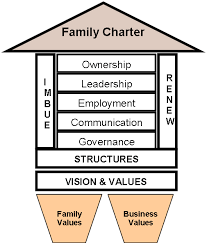
Creating a sustainable framework – The Family Charter
Planning is essential and the early involvement of a neutral experience third party can help work though the creation of a framework. This involves the development of guidelines for family member employees to include education and experience requirements, competitive salaries and promotional opportunities, and gaining the respect of non-family employee peers through above average work performance. It also involves the critical but delicate process of engaging, preparing, and selecting interested, capable family members as future leader(s). A family charter which formally sets out these guidelines or rules of engagement have proved to be very successful in a number of well-known companies, the Musgrave Group being the best know.
Common challenges
1. Letting go: The first generation leader, often a strong, hands-on entrepreneur, is required to make the gradual, difficult shift to a more mentoring, advisory role. After years at the centre of the business, letting go is more complex than it seems. It’s an emotional, life changing process which requires developing a different, less central role in the company, and the development of new endeavours and roles in business, the community and the family.
2. Stepping up: The second generation leader(s), often self-assured and confident, can struggle to “gradually” assume responsibility for the family enterprise. In their frustration to move up and out from under their parent/leader they can develop a defensive arrogance, cutting them off from the deeper learning needed for success over the long haul. Maintaining a balance between their wish to move forward and their need to remain respectful and open to mentoring can be difficult.
3. Going slow to go fast: Successful family business succession takes time. It requires good business and succession planning and lots of room for hands-on-practice and on the job training. Above all, it requires regular and effective communication between the principles, family members and key employees. It’s at least a three year process.
Family business succession is a journey with long-term financial and relationship ramifications. It offers a wonderful opportunity to take the business and the family to a higher level of functioning. Investing your time and resources in this significant venture will set the stage for good stewardship of the family business for generations to come. It is possibly the biggest transaction you will ever under take. You have a responsibility to plan it and do it in a way which gives it the best chance of sustainability. The lawyers and accountants are there to execute the documents and plan the taxes but you may need independent help with the heavy lifting of creating a good plan in the first place.
Next Steps?
If you want help putting together your succession plan or there are some other family business issues bothering you, please email info@TheAlternativeBoard.IE or contact your local TAB facilitator.